
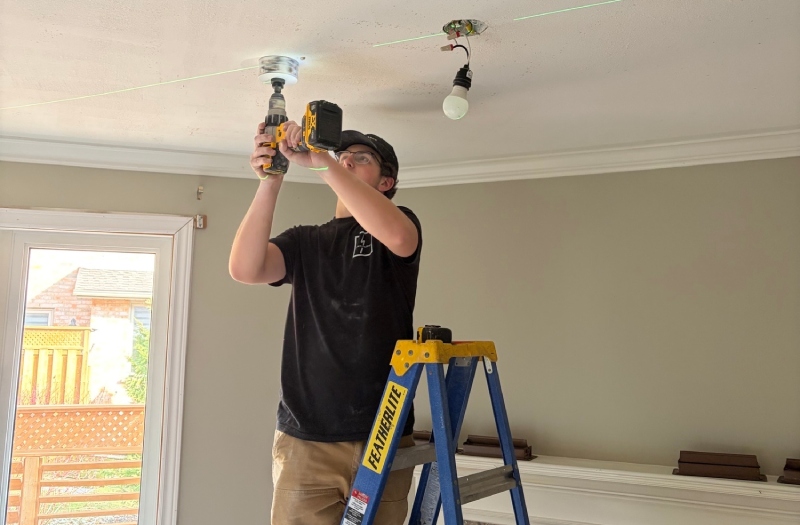
A licensed electrician in Ontario can legally perform electrical work for a homeowner only when the work is contracted through a Licensed Electrical Contractor. A general handyman cannot take on residential electrical work simply because it appears minor. The difference affects safety, ESA notifications, inspections, and the records you may need later.
KEY TAKEAWAYS
If you hire someone for electrical work in an Ontario home, the business generally must be a Licensed Electrical Contractor, subject to limited regulatory exemptions.
• An owner or occupant may perform electrical work in their own residence, but ESA notifications and reviews are still required.
• A handyman or general contractor cannot personally perform residential electrical work unless the work falls under an exemption or a properly licensed electrical contractor performs it.
• Most electrical work requires an ESA notification, and completed work may need to be reviewed before it is concealed.
• You can verify a contractor through ESA, and you should see the ECRA/ESA licence number on public-facing business materials.
The Legal Line: What Counts as Electrical Work Under Ontario Rules
Electrical work refers to work on electrical equipment or an electrical installation that falls under Ontario electrical safety rules. That includes much more than panel replacements. Adding, extending, altering, or repairing wiring can all fall within the regulated scope.
For a homeowner, the hiring rule is straightforward. If you pay someone to do electrical work in your home, that work must generally be performed by a Licensed Electrical Contractor. Ontario Regulation 570/05 sets the contractor licensing framework, while the Electrical Safety Authority oversees licensing and electrical safety compliance.
There is an important homeowner exception. An owner or occupant may perform electrical work in their own residence. That does not make a friend, neighbour, renovation contractor, or handyman an authorized electrical contractor. ESA guidance states that the homeowner doing DIY work remains responsible for code compliance and required notifications.
This distinction matters because “I know how to change it” is not the same as being legally authorized to provide electrical services. A handyman can handle many legitimate repair and finishing tasks. Once the work involves regulated electrical work, the person you hire needs the proper authorization.
Why Unlicensed Electrical Work Voids Permits and Inspections
Unlicensed electrical work can break the permit and inspection chain because the person you hired may not be authorized to serve as the electrical contractor of record. In Ontario, most electrical work must be reported to ESA through a notification of work, often called an electrical permit.
The heading uses “voids” as shorthand, but the practical issue is authorization and documentation. Unlicensed work does not automatically void every valid ESA record. Instead, the homeowner may be left with work that was never properly notified, reviewed, or tied to an authorized contractor.
A Licensed Electrical Contractor typically manages the notification and inspection process for contracted work. Once the ESA review is complete, the notification holder can receive a Certificate of Acceptance. ESA considers this certificate an important record for insurance, resale, and peace of mind.
If wiring will be hidden behind drywall, ceilings, insulation, or finishes, timing matters. Electrical work may need to be reviewed before it is concealed. Hiring the right contractor from the start helps keep the work, paperwork, and inspection sequence aligned.
The Liability a Homeowner Incurs When the Work Is Not Licensed
When you hire an unlicensed person, you may retain more risk than you expected. You may have paid for a finished result, but you can still face questions about who performed the work, whether it met code, and whether ESA reviewed it.
That risk can surface later during a renovation, a home sale, an insurance review, or after a failure during troubleshooting. A missing record does not prove the wiring is unsafe. It does mean you may need additional investigation before another contractor can confidently build on that work.
If you already suspect undocumented or questionable wiring, do not open energized equipment or remove covers to investigate it yourself. Our inspections and troubleshooting service can assess the visible system, identify concerns, and explain practical next steps in plain language.
Insurance is also policy-specific. No responsible electrician can predict how an insurer will decide a claim involving unlicensed work. Keep your quotes, invoices, ESA records, and Certificate of Acceptance. Ask your insurer directly if you have questions about your policy or a past installation.
Jobs Homeowners Often Hand to a Handyman by Mistake
Small electrical jobs are easy to underestimate because the finished device looks simple. The risk lies behind the cover plate, inside the box, and in the circuit feeding it.
Common examples include replacing or adding receptacles, moving switches, extending circuits, installing new lighting, and modifying wiring during a basement or kitchen renovation. Panel, breaker, EV charger, hot tub, generator, and service work clearly belong with an authorized electrical contractor.
A renovation contractor can still coordinate the project. The electrical portion should be subcontracted to a Licensed Electrical Contractor. This lets your general contractor manage the schedule without asking an unlicensed worker to cross the legal line.
The same principle applies when a task involves mixed trades. A handyman can patch drywall, mount trim, or handle non-electrical finishing. The electrical connection itself should remain with the properly authorized person.
If you are grouping several updates, review our residential electrical services before the work starts. Bundling related electrical tasks can make planning easier and reduce the risk of new work conflicting with existing circuits.
How to Confirm the Person on Your Property Is Licensed
The fastest way to check is to verify the business, not just the person standing at your door. ESA provides a contractor locator that lets homeowners confirm whether an electrical contractor holds a valid licence.
Licensed Electrical Contractors must display their licence number when communicating with the public. Look for an ECRA/ESA licence number on the quote, contract, invoice, website, advertising, and business vehicle. A vague claim such as “licensed and insured” is not a substitute for a licence you can verify.
Ask who is responsible for the electrical notification and ESA inspection. A clear answer should be provided before work starts. You can also ask who will supervise the electrical work and who will issue the Certificate of Acceptance when the review is complete.
Sandiparks Electrical is a Master Electrician-led, ECRA-registered electrical contractor serving Mount Brydges, London, and Southwestern Ontario. Ryan holds a Master Electrician licence earned in 2020.
Before choosing any contractor, review recent projects and ask direct questions about permits, inspections, and scope. Good contractors do not make those questions feel awkward. They make the process easier to understand.
Frequently Asked Questions
Is it illegal for a handyman to replace an outlet in Ontario?
If you hire a general handyman to replace an outlet in an Ontario home, that person generally cannot perform the electrical work unless they are working through a Licensed Electrical Contractor or a specific exemption applies. An owner or occupant may perform electrical work in their own residence, subject to Ontario code and notification rules. Hiring someone else changes the legal question.
What happens if unlicensed electrical work is found during a home sale?
Unlicensed electrical work does not automatically halt a home sale, but it can raise questions about safety, documentation, and ESA review. A buyer, lawyer, insurer, or home inspector may request records or a further assessment. A Licensed Electrical Contractor can inspect accessible work, identify defects, and explain what may require correction or ESA involvement.
Does my insurance cover damage caused by unlicensed electrical work?
There is no universal answer because insurance coverage depends on the policy, the cause of the loss, and the facts of the installation. Do not assume a claim is automatically covered or denied. Keep invoices and ESA documentation, then ask your insurer how unlicensed or undocumented electrical work is treated under your policy.
Can a licensed electrician correct work a handyman already did?
Yes. A licensed electrical contractor can assess work previously done by a handyman and correct any accessible, identified defects. The contractor may need to trace circuits, open specific areas, replace non-compliant work, or coordinate with ESA. The exact process depends on what was changed and whether the work was previously notified or inspected.
Electrical work is one area where the person you hire matters as much as the task itself. A verified contractor protects the path from safe installation to proper ESA documentation. That aligns with how we work at Sandiparks: honest trades done right, with clear answers and no shortcuts. If you are planning electrical work in Southwestern Ontario, request a quote, and we will explain the scope, permitting, and next steps before work begins.